A Level Design Intro - Part 1
An introduction to some level design theories and practises I've found work well when I have created retail first person levels. I have kept the examples simple and easy to understand rather than an exhaustive written document and will continue more examples in the future - Thanks!


Influencing the player through simple geo changes
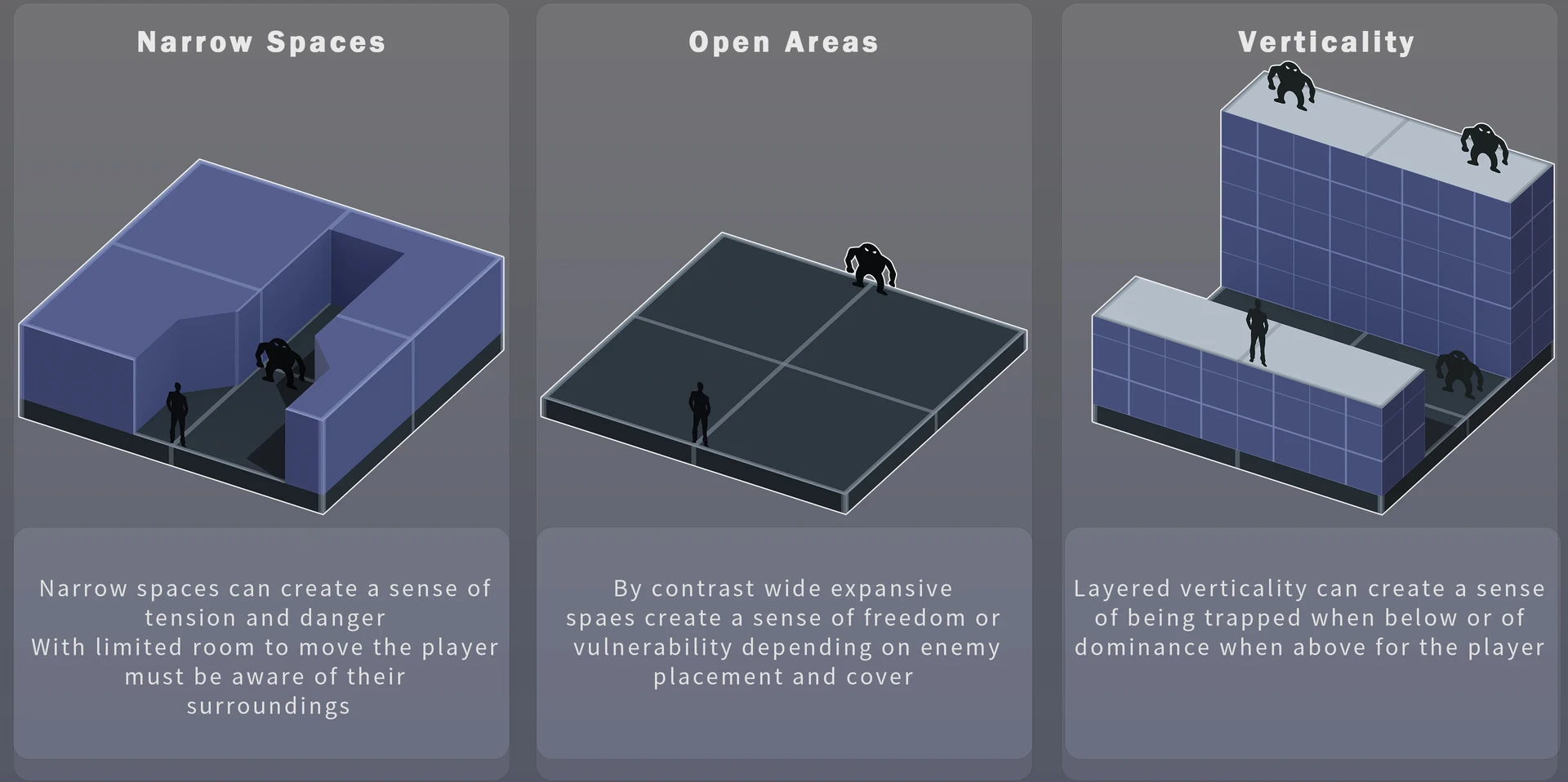
Contrasting narrow, open and elevated spaces

Simple examples to control players sightlines and expectations

Linear Combat Level Example

Corridor-room-corridor layouts have far reduced options for the player and enemies - The player is generally always facing the enemies and has limited options to move around which is boring
Arena Combat Level Example

Arena Combat Spaces encourage circular movement, having multiple routes of attack for both the player and monsters, giving the player options will feel more interesting and will feel more fair
Lane Combat Level Example

Ensure the space supports the challenge, the player must have cover and options to combat this so again it feels challenging but fair

Spiral Level Flow Example

Level flow is how a player moves through the playable spaces within a level, much of this is anticipating what the player will do, where they will stand etc so frequent playtesting is vital
Circle Level Flow Example

Frequent play-tests and asking ‘what would an agressive player do here’ or ‘Is there enough ammo for this encounter?’ ensure the level ‘feels’ correct to the person playing it
Anchor Level Flow Example

Broadly speaking I use the same 3 rules of Spirals, Circles and Anchors when creating spaces